Disclaimer: This post contains affiliate links. If you click through and buy any home fitness gear, I receive a small commission at no additional cost to you.
Disclaimer: The information on this blog is for educational purposes only and does not substitute for professional medical advice. Always consult a physician before starting a new exercise program or using home gym equipment.
For many older adults, a few well-chosen, low-impact fitness equipment pieces are enough to build a simple routine that feels comfortable and is easy to stick with. The trick is knowing which pieces are worth the space and what to look for before you buy.
This guide covers five pieces of home exercise equipment for seniors: a seated pedal exerciser, light hand weights, ankle weights, a balance pad, and a foam roller with yoga blocks. For each one, you will see who it suits, what to look for, a simple way to use it and where it falls short. Let’s take a look.
How to Choose Equipment You Will Actually Use
Before looking at specific picks, keep these five checks in mind:
- Start light and simple. Gentle equipment lets you learn each movement before adding challenge.
- Look for stability. Non-slip feet, a solid frame and a firm grip matter more than extra features.
- Check how easy it is to adjust. If setting it up feels like a chore, it will sit in the closet.
- Think about storage. Equipment that tucks beside a chair or under a bed is easier to use more often.
- Use a stable chair without wheels. Many of the moves below can be done seated, and a sturdy chair adds support.
If you are new to exercise, or you have a health condition, check with your physician before you begin.
1. Seated Pedal Exerciser
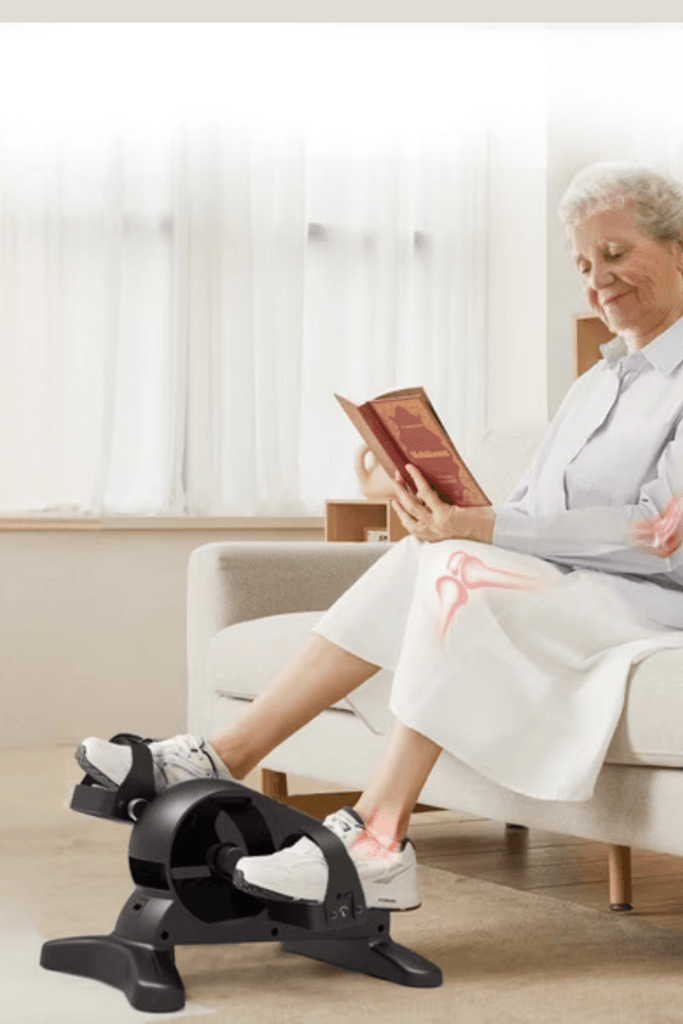
A seated pedal exerciser is a compact set of pedals you place on the floor in front of a chair. You pedal while seated, which makes it one of the gentlest ways to move your legs at home. Many people also set one on a table to pedal with their arms.
Who it suits: Anyone who wants a low-impact way to move while watching TV, reading or sitting at a desk.
What to look for:
- Adjustable tension, so you can start with very light resistance
- Non-slip feet or a rubber base that stays put on the floor
- Foot straps or pedals with a good grip
- A quiet design, so it does not interrupt TV or phone calls
- A small, lightweight frame that is easy to move and store
How to use it: Sit tall in a sturdy chair without wheels, place the pedals on the floor in front of you and pedal slowly for a few minutes. Build up gradually, and stop if anything feels uncomfortable.
Where it falls short: It works mainly the legs, so pair it with an upper-body option like light hand weights. The lowest tension may also feel too easy after a few weeks, which is a good sign that you can add time or raise the tension a little.
“Click HERE to View This Seated Pedal Exerciser”
2. Light Hand Weights
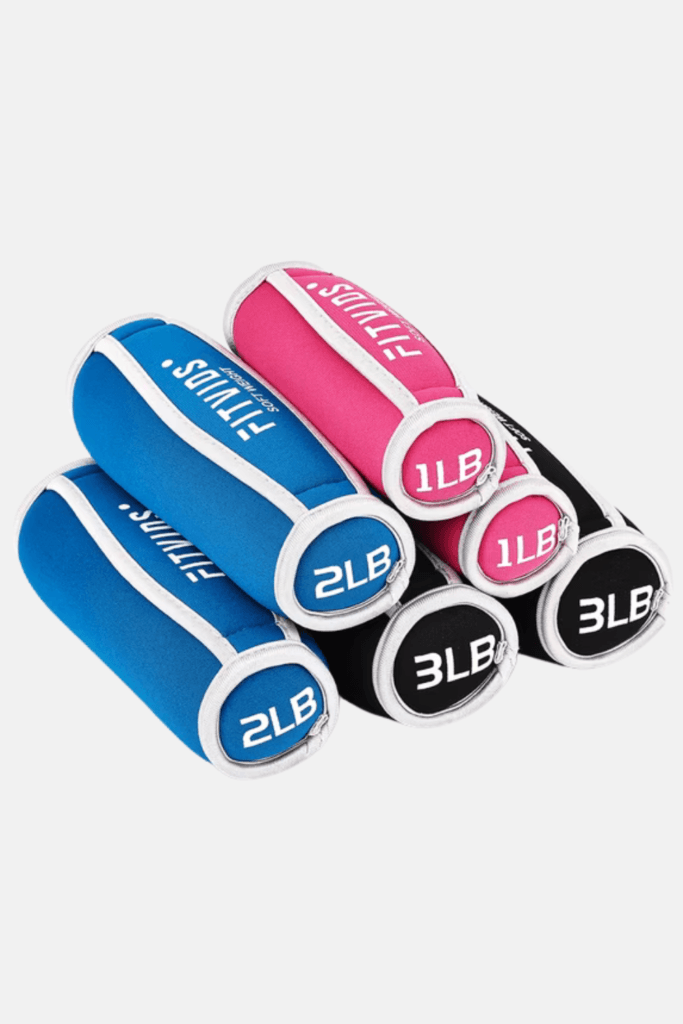
Light hand weights are one of the simplest ways to add gentle strength work to seated or standing routines. A set of light dumbbells, or an adjustable pair that lets you change the weight, is enough to get started.
Who it suits: Beginners who want to try bicep curls, shoulder presses and other seated moves with a little more challenge than bodyweight alone.
What to look for:
- A light starting weight, such as 1 to 3 pounds, with the option to go up later
- A comfortable, non-slip grip that is easy to hold
- A design that does not roll away when you set it down
How to use them: Sit tall in a sturdy chair and try 8 to 10 slow curls or presses, resting as long as you need. Move smoothly, and choose a weight that lets you finish each rep with control.
Where it falls short: Dumbbells work one muscle group at a time, so they take a little more learning than a pedal exerciser. If you are unsure about form, start with the lightest weights and look for a video guide.
“Click HERE to View These Light Hand Weights”
3. Ankle Weights
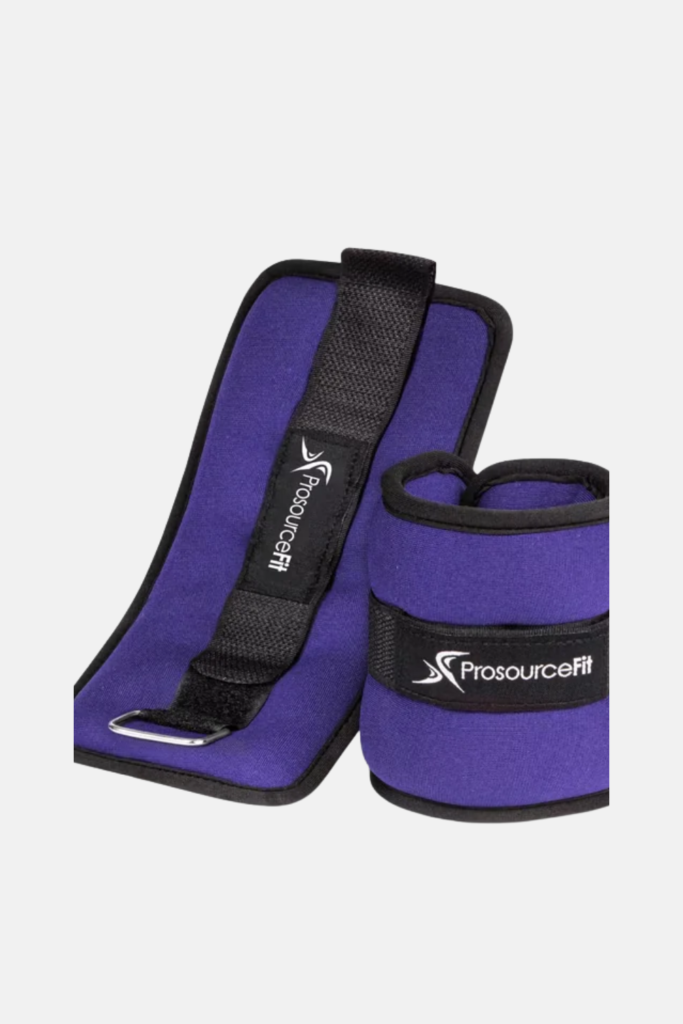
Ankle weights are soft, wrap-around weights that add a little resistance to seated leg moves like knee extensions and marches. They are a gentle way to make familiar movements slightly more challenging.
Who it suits: People already comfortable with seated leg exercises who want a little extra resistance.
What to look for:
- A very light starting weight, with the option to adjust
- A soft, comfortable strap that does not pinch or slide
- Secure fastening that stays in place during movement
- A snug but not tight fit around the ankle
How to use them: Sit in a sturdy chair, strap them on and slowly extend one leg until it is straight, then lower with control. Start with a few repetitions on each side.
Where it falls short: Ankle weights are not for everyone. If your knees or hips feel uncomfortable, take them off and go back to bodyweight. They also work best as a second step after you are comfortable with the movement, not as a starting point.
“Click HERE To View These Comfortable, Adjustable Ankle Weights”
4. Balance Pad

A balance pad is a soft foam pad that adds a gentle challenge to standing moves. Standing on it asks your feet and ankles to work a little harder, which can make everyday exercises feel more engaging.
Who it suits: People who are comfortable standing and want to add variety to simple standing moves, with something sturdy to hold nearby.
What to look for:
- A non-slip bottom that grips the floor
- Firm but cushioned foam that does not feel too squishy
- A size large enough for both feet
- A surface that is easy to wipe clean
How to use it: Place the pad on a flat floor next to a counter or a sturdy chair, so you can hold on. Stand with feet hip-width apart and try gentle weight shifts, or add a few slow knee bends while holding the support. Stay within arm’s reach of something stable at all times.
Where it falls short: A balance pad is a challenge, not a safety device. If standing on it feels unsteady, skip it for now and stick with seated options. It is also not meant to be used without a support nearby.
“Click HERE to View This Balance Pad”
5. Foam Roller and Yoga Blocks

A foam roller and a pair of yoga blocks are simple tools for gentle stretching and floor-based movement. The roller may feel good after a stretch, and the blocks give your hands or hips something to rest on.
Who it suits: Anyone who enjoys gentle stretching, mobility moves or chair yoga and wants a little extra support.
What to look for:
- A foam roller with a smooth or lightly textured surface, not an aggressive one
- Blocks that are firm, lightweight and non-slip
- A size that is easy to carry and store
- A mat or carpet underneath for comfort
How to use them: Rest your hands on a block during a seated or kneeling stretch to take pressure off, or roll gently over a muscle for a short time. Move slowly and stop if you feel sharp discomfort.
Where it falls short: These tools do not add much strength work, so they work best alongside weights or a pedal exerciser. Foam rolling is also not for everyone, so keep it gentle and short.
“Click HERE to View This Foam Roller and Yoga Block Set”
Putting It Together: A Simple Weekly Starter Mix
You do not need all five pieces at once. Here is one easy way to start:
- Start with one piece. A seated pedal exerciser or a pair of light hand weights is a good first choice.
- Add a second piece after a few weeks. If the first one feels comfortable, add another that works a different part of the body.
- Keep sessions short. Many people begin with two or three short sessions a week, with a rest day in between.
- Use the same chair. A sturdy chair without wheels that you always use makes the routine easier to repeat.
The right amount depends on your comfort and any guidance from your doctor.
Safety Tips Before You Begin
- Check your equipment each time. Look for loose straps, cracks or worn spots before each session.
- Use stable surfaces. Place equipment on a flat, non-slip floor, and keep a sturdy chair or counter within reach.
- Move slowly. Smooth, controlled movement matters more than speed or weight.
- Stop if something hurts. A mild muscle effort is expected, but sharp pain, dizziness or shortness of breath are signs to stop and check with your doctor.
- Start light. You can always add time, repetitions or weight later.
Frequently Asked Questions
What is the best home exercise equipment for seniors?
The best equipment is whatever you will use regularly. For many people, a seated pedal exerciser or a pair of light hand weights is an easy place to start, because both work well from a chair.
Do I need a lot of space?
No. All five pieces here can be stored beside a chair, under a bed or in a closet, so a small corner is enough.
How often can I exercise at home?
Many people begin with two or three short sessions a week and build up gradually. Check with your doctor to find what is right for you.
Can I use these if I have joint pain or a health condition?
If you have a health condition, joint pain or balance concerns, talk with your physician or physical therapist before starting. They can tell you which equipment is appropriate for you.
Do I need all five?
Not at all. One or two pieces are plenty to begin with. Add more later if you want more variety.
Final Thoughts
The best home exercise equipment for seniors is gentle, simple and easy to use every week. A seated pedal exerciser, light hand weights, ankle weights, a balance pad and a foam roller with yoga blocks each offer a different, low-impact way to stay active at home. Start with one piece, go slowly and build a routine that fits your comfort and your schedule. I hope this guide makes it easier to choose, and I wish you the best on your fitness journey.