Disclaimer: This post contains affiliate links. As an Amazon Associate, I earn from qualifying purchases. If you click through and buy any home fitness gear, I receive a small commission at no additional cost to you.
Disclaimer: The information on this blog is for educational purposes only and does not substitute for professional medical advice. Always consult a physician before starting a new exercise program or using home gym equipment.

[AI-generated illustrative image] Image for illustration purposes
Walking pads have become one of the most convenient pieces of home fitness equipment for people who want to stay active without leaving the house. A walking pad is essentially a compact treadmill designed for walking rather than running, often used under a standing desk or in small living spaces. These devices allow users to stay active while watching television, reading, or even working.
One of the main advantages of a walking pad is that it makes daily movement more accessible. Many adults spend long hours sitting each day, which can increase the risk of heart disease, obesity, and other health issues. Adding regular walking sessions helps increase daily activity levels and reduce sedentary time.
A well-structured walking pad workout plan can improve cardiovascular fitness, boost calorie burn, and strengthen muscles in the lower body. Walking may seem simple, but when combined with variations such as incline walking or interval training, it becomes a powerful low-impact exercise routine suitable for beginners and experienced exercisers alike.
Various Types of Walking Pads
Before we get into the different exercises and workout associated with these products, I have listed a number of Walking Pads below. In choosing one, consider the type of exercise you are planning, space and budget. Let’s take a look:
- Walking Pad Treadmill for Home – Under Desk Walk Pads with Remote Control
- Walking Pad, Under Desk Treadmill with Incline for Home Office
- MERACH W50 Walking Pad Treadmills for Home, 12% Auto Incline, 400lbs Capacity
- Walking Pad, 6% Walking Pad with Incline, No-Assembly Walking pad Treadmill with APP and Remote Control
** Best Choice For Apartment Residents From This List
The MERACH W50 Walking Pad Treadmill is the best choice of the group. Noise is the biggest concern in apartments, and this specific model stands out from the others. It runs at just 25 dB thanks to its 3.5 HP brushless motor — quiet enough for flats, shared homes, or home office use without disturbing others.
Below are five effective exercises that can be performed on a walking pad, along with their benefits and how they contribute to an overall fitness routine.
1. Steady-Pace Walking
Steady-pace walking is the foundation of any walking pad workout plan. This exercise involves walking at a comfortable, consistent speed for a set period of time. Most walking pads operate at speeds between 1 and 4 miles per hour, which is ideal for low-impact cardio workouts.
This type of walking is perfect for beginners because it allows the body to adapt to regular movement without placing excessive strain on joints. The goal is to maintain a natural walking rhythm while keeping good posture.
How to Perform
- Set the walking pad speed between 2 and 3 mph.
- Stand upright with your shoulders relaxed and your core engaged.
- Walk naturally, swinging your arms gently at your sides.
- Continue for 15–30 minutes.
Benefits
Steady walking helps improve cardiovascular endurance and overall circulation. Even slow walking can support heart health and improve blood flow throughout the body.
Another benefit is calorie expenditure. Walking at moderate speeds can burn around 150–200 calories per hour depending on body weight and pace.
This exercise is also excellent for building consistency. Because it is low-impact and comfortable, people are more likely to stick with it long term.
2. Brisk Walking
[AI-generated illustrative image] Image for illustration purposes
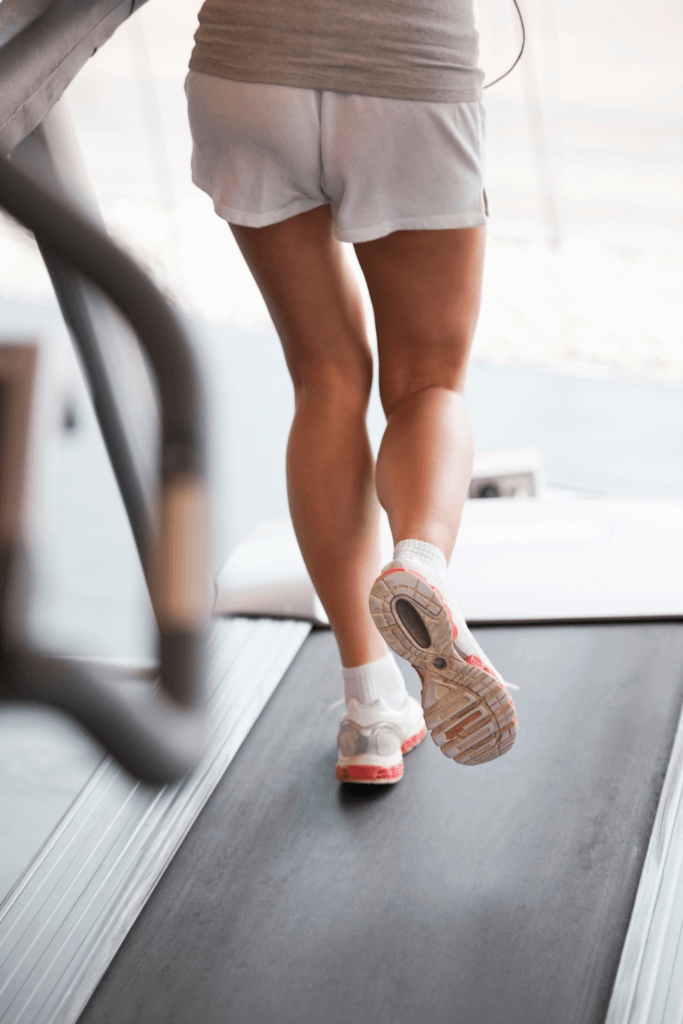
Brisk walking increases the intensity of a walking pad workout without requiring running. This exercise involves walking at a faster pace that elevates the heart rate and stimulates cardiovascular fitness.
Many people underestimate brisk walking as a workout. However, increasing speed slightly can significantly improve calorie burn and endurance.
How to Perform
- Start with a 5-minute warm-up at a slower pace.
- Increase the speed to 3–4 mph.
- Maintain the brisk pace for 10–20 minutes.
- Focus on quick, controlled steps and steady breathing.
Benefits
Brisk walking helps strengthen the heart and lungs while improving stamina. Regular brisk walking sessions can increase aerobic capacity and help the body utilize oxygen more efficiently.
Another key benefit is weight management. Because brisk walking raises the heart rate, it increases calorie burn compared with slower walking.
Additionally, brisk walking helps strengthen leg muscles, including the quadriceps, hamstrings, and calves.
3. Incline Walking
Incline walking is one of the most effective ways to intensify a walking pad workout. Some walking pads include adjustable incline features that simulate walking uphill.
Walking on an incline forces the body to work harder, especially the glutes and hamstrings. Even a small incline can dramatically increase workout intensity.
How to Perform
- Begin with a 5-minute warm-up at a flat setting.
- Increase the incline to 2–3 percent.
- Walk at a moderate speed for 5–10 minutes.
- Lower the incline briefly, then repeat intervals.
Experts often recommend alternating between flat walking and incline intervals to increase endurance and strength.
Benefits
Incline walking significantly increases muscle engagement, particularly in the glutes and calves. It also strengthens joints in the ankles and knees while improving flexibility.
Another advantage is improved calorie burn. Walking uphill requires more energy, which means the body burns more calories during the same workout duration.
Incline training also enhances cardiovascular fitness because the heart must work harder to deliver oxygen to the muscles.
4. Interval Walking
[AI-generated illustrative image] Image for illustration purposes
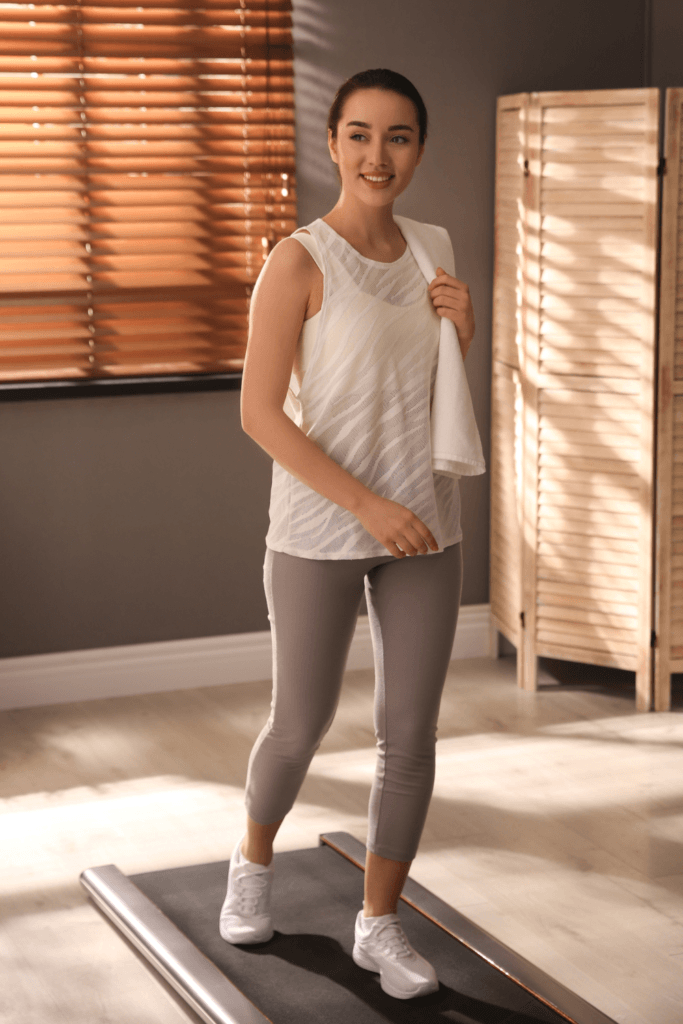
Interval walking alternates between slower and faster speeds. This approach helps improve endurance and makes workouts more engaging.
Instead of walking at one speed for an extended period, interval training introduces bursts of intensity followed by recovery periods.
How to Perform
- Warm up for 5 minutes at a slow pace.
- Increase speed to a brisk pace for 1–2 minutes.
- Reduce speed for 2 minutes to recover.
- Repeat the cycle for 20–30 minutes.
Benefits
Interval walking boosts cardiovascular performance and improves stamina. The variation in speed challenges the heart and lungs more than steady walking alone.
Another advantage is improved calorie burn. Short bursts of higher intensity can increase overall energy expenditure and help support weight-loss goals.
Interval workouts also keep exercise interesting. Many people find that alternating speeds makes the workout feel shorter and more engaging.
5. Weighted Walking
Weighted walking involves holding light dumbbells or wearing ankle weights while walking on the pad. This variation adds resistance and helps build muscular strength.
Because walking pads are designed primarily for low-impact movement, weights should be light and manageable.
How to Perform
- Select light dumbbells (1–3 pounds).
- Walk at a moderate pace.
- Keep arms bent at a 90-degree angle while walking.
- Maintain controlled movements and avoid swinging weights excessively.
Benefits
Weighted walking helps strengthen the arms, shoulders, and core while maintaining the cardiovascular benefits of walking.
Adding resistance also increases calorie burn and muscle activation. The extra load forces the body to stabilize itself while walking, which engages the core muscles more effectively.
Weighted walking is especially useful for people who want to combine strength training and cardio in a single workout.
Walking Pad Workout Routine Chart (30 to 45 Minutes)
[AI-generated illustrative image] Image for illustration purposes
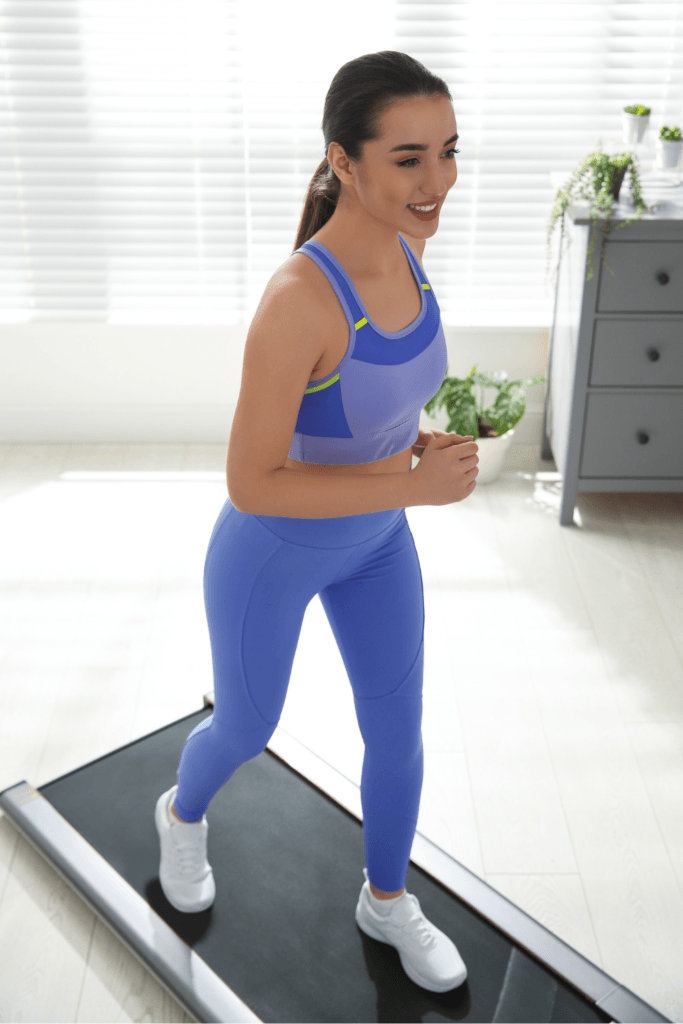
Below is a simple walking pad workout routine that incorporates all five exercises.
| Exercise | Speed | Duration | Intensity |
|---|---|---|---|
| Warm-Up Walk | 2 mph | 5 minutes | Easy |
| Steady-Pace Walking | 2.5–3 mph | 10 minutes | Moderate |
| Brisk Walking | 3.5–4 mph | 5 minutes | Moderate-High |
| Incline Walking | 2.5–3 mph with incline | 5 minutes | Moderate |
| Interval Walking | Alternate 2 mph / 3.5 mph | 10 minutes | Moderate-High |
| Weighted Walking | 2.5–3 mph with light weights | 5 minutes | Moderate |
| Cool-Down Walk | 2 mph | 5 minutes | Easy |
Total workout time: 30–45 minutes
This routine provides a balanced mix of endurance, strength, and cardiovascular training.
Additional Facts About Walking Pads
Walking pads have grown increasingly popular in home fitness because of their convenience and versatility. Unlike traditional treadmills, they are designed to be compact and easy to store, making them ideal for apartments or home offices.
Many people use walking pads while working at a standing desk, allowing them to stay active throughout the day. Office workers who use walking pads at their desks often report a noticeable increase in daily step count and feeling more physically active throughout the day.
Walking pads are also considered a low-impact form of exercise. The cushioned belt reduces stress on the joints, making them suitable for beginners, older adults, and people recovering from mild injuries.
In addition to physical benefits, many people find that walking can improve mental focus and help reduce stress, making it a simple way to build in light movement during the day.
What Consistent Walking Pad Use Can Support Over Time
With a consistent walking pad routine like the one above, many people notice gradual improvements over time — better energy levels, stronger daily movement habits, and improved endurance.
Regular walking sessions can also support calorie burning, improve circulation, and make it easier to stay active from home without intense gym sessions. Over time, consistent use may help strengthen the lower body, especially the calves, glutes, and thighs, while supporting low-impact cardio fitness and better workout consistency. As always, individual results vary based on starting fitness level, consistency, and other factors.
Conclusion
[AI-generated illustrative image] Image for illustration purposes
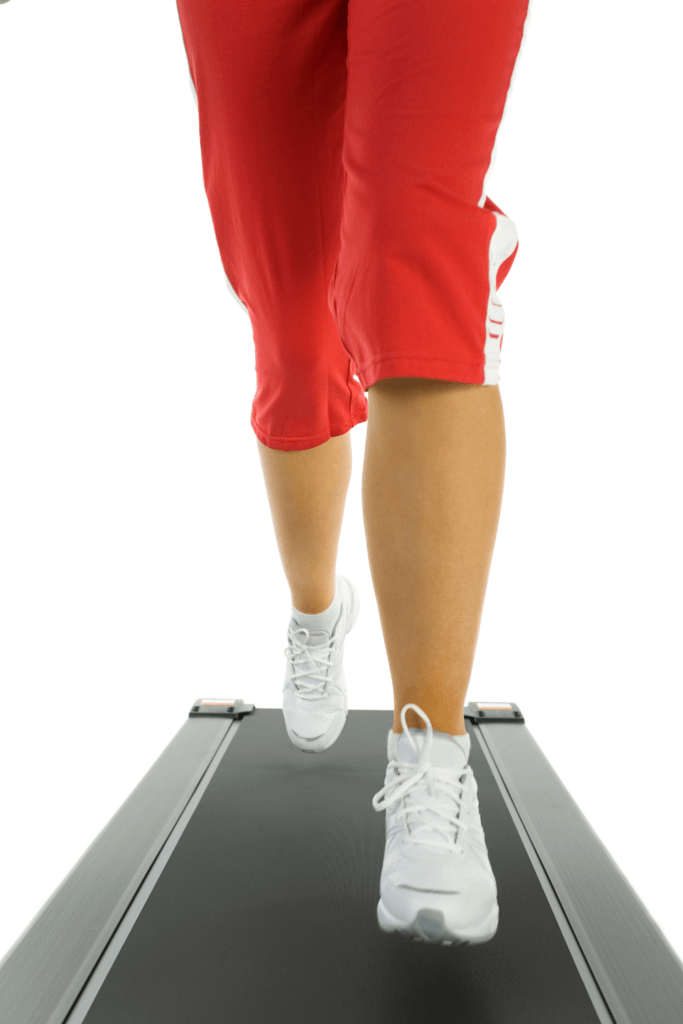
A walking pad workout plan is a simple yet powerful way to stay active at home. These compact machines make it easy to incorporate movement into everyday life, whether during work, while watching television, or as part of a dedicated exercise session.
Exercises such as steady walking, brisk walking, incline walking, interval walking, and weighted walking create a well-rounded routine that improves cardiovascular health, strengthens muscles, and increases calorie burn. Because walking pads provide a low-impact workout, they are accessible to people of all fitness levels.
With consistent use and a structured routine, a walking pad can help transform daily movement into an effective fitness habit. Even small amounts of walking throughout the day can add up to significant health benefits, making this simple device a valuable addition to any home workout space.