Disclaimer: This post contains affiliate links. As an Amazon Associate, I earn from qualifying purchases. If you click through and buy any home fitness gear, I receive a small commission at no additional cost to you.
Disclaimer: The information on this blog is for educational purposes only and does not substitute for professional medical advice. Always consult a physician before starting a new exercise program or using home gym equipment.
- The One Tool That Makes These Exercises More Effective: Resistance Bands
- What’s Holding You Back? Eliminate The Obstacles
- Recommended Equipment for These Chair Exercises
- 1. Seated Leg Extensions for Lower Body Strength (See How)
- 2. Seated Arm Raises for Upper Body Strength (See How)
- 3. Seated Marching for Circulation and Cardio (See How)
- 4. Seated Torso Twists for Flexibility and Core Strength (See How)
- 5. Heel-Toe Raises for Ankle Strength and Stability (See How)
- 6. Seated Knee-to-Chest for Flexibility and Relief (See How)
- 10-Minute Chair Workout for Seniors
- Final Thoughts

[AI-generated illustrative image] Image for illustration purposes
For the majority of seniors, an exercise plan is required that doesn’t require a great deal of stress on our bodies. Let’s face it, our bodies have lost some flexibility and muscle tone over the years. Fitness activities such as jogging, weight lifting, and high level cardio exercises are no longer an option to us. This is not to say we do nothing to maintain some level of fitness. This is where chair exercises for seniors over 50 becomes a great option.
This specific workout routine is one of the simplest and most effective ways for seniors to stay active, build strength, and maintain independence without needing to stand for long periods. These low-impact workouts are gentle on the joints, easy to follow, and can be done right at home with minimal space.
By committing just a few minutes each day, seniors can improve circulation, reduce stiffness, strengthen muscles, and support better balance—all from a comfortable seated position. In this article, we will take a look at 6 of these chair exercises and some of the fitness tools to be used with these exercises. In addition, you will find how these exercises are beneficial to our overall well-being.
Before you start: If you have significant balance concerns, a recent injury, or a condition affecting mobility, talk to your doctor or physical therapist before beginning. While chair exercises are lower-risk than standing workouts, always use a sturdy, stable chair without wheels, placed on a non-slip surface.
The One Tool That Makes These Exercises More Effective: Resistance Bands
If you’re going to add one piece of equipment to your chair workout routine, make it a set of resistance bands. Cheap, they take up hardly any space and can be used for almost every exercise in this article – around your ankles, wrists, or the legs of your chair to add light, adjustable resistance to seated movements.
The resistance of bands can be adjusted by how far you stretch them, unlike dumbbells or ankle weights. This makes bands one of the safest ways to slowly build strength without putting too much strain on your joints. Ideal for seniors to use at home.
Check Price on Resistance Bands on Amazon →
By committing just a few minutes each day with a resistance band in hand, seniors can improve circulation, reduce stiffness, strengthen muscles, and support better balance — all from a comfortable seated position. Below, we’ll walk through 6 chair exercises that pair with this one simple tool, plus a few optional extras if you want to build out your routine further.
What’s Holding You Back? Eliminate The Obstacles
When you think of chair exercises for seniors, you may wonder why this type of workout routine is appropriate. For many seniors over 50, it comes down to a number of concerns which are listed below. This is not an all-inclusive list, but one that does seem common. Let’s take a look.
- Fear of Falling or Injury
- Joint Pain and Stiffness
- Low Energy and Fatigue
- Lack of Confidence
- Limited Space or Equipment
- Feeling That Exercise Is “Too Late” or Not Worth It
The chair exercise listed below, will go a long way in eliminating these obstacles. Let’s take a look at these exercises below:
Recommended Equipment for These Chair Exercises
Simple, affordable tools that make every move safer and more effective
Ankle Weights
Adds gentle, adjustable resistance to leg movements without straining the joints. Great for building lower body strength gradually over time.
Used in: Seated Leg Extensions, Seated Marching
Check Price on Amazon →Resistance Bands
The most versatile tool in this list — loops around ankles, chair legs, or wrists to add light tension to almost any seated exercise.
Used in: Leg Extensions, Arm Raises, Marching, Heel-Toe Raises, Knee-to-Chest
Check Price on Amazon →Light Dumbbells (1–5 lbs)
Builds arm and shoulder strength for everyday tasks like lifting and reaching. Start with 1–2 lbs and progress at your own pace — no rush.
Used in: Seated Arm Raises
Check Price on Amazon →Balance Cushion
Sits on your chair seat and creates a gentle unstable surface that activates your core with every movement — without any extra effort on your part.
Used in: Seated Torso Twists, Heel-Toe Raises
Check Price on Amazon →Light Medicine Ball
Adds a small amount of weight to torso twists and core movements, making them more effective without putting pressure on the back or joints.
Used in: Seated Torso Twists
Check Price on Amazon →Soft Exercise Ball
Gentle and easy to grip — provides light support during stretches and can be squeezed between the knees to engage inner thigh muscles.
Used in: Torso Twists, Knee-to-Chest Stretch
Check Price on Amazon →Stretch Strap
Helps you reach further into stretches safely — especially helpful for hip and lower back flexibility when lifting the leg toward the chest feels limited.
Used in: Seated Knee-to-Chest Stretch
Check Price on Amazon →As an Amazon Associate I earn from qualifying purchases. Prices are accurate at time of writing and subject to change.
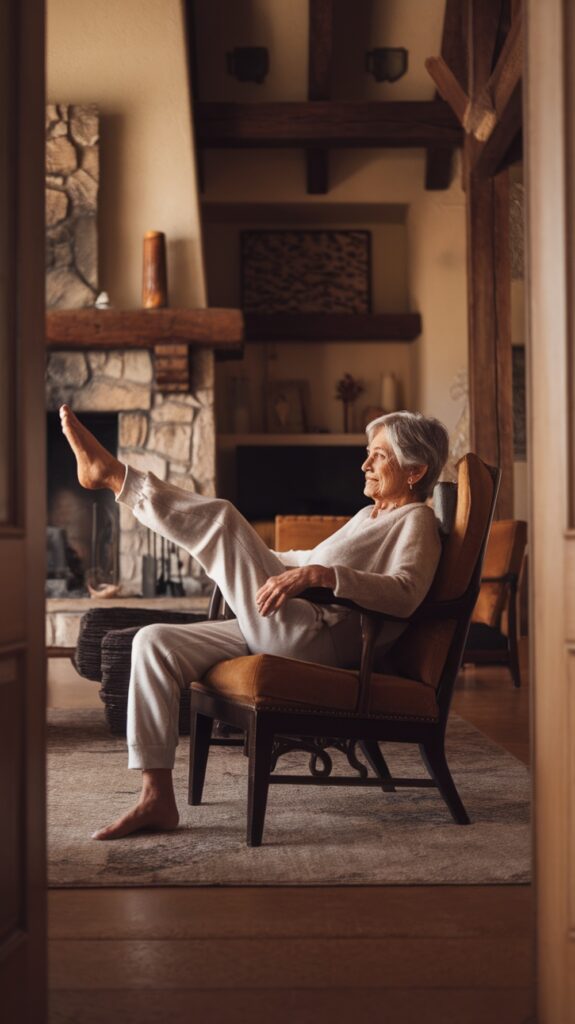
1. Seated Leg Extensions for Lower Body Strength (See How)
[AI-generated illustrative image] Image for illustration purposes
Seated leg extensions are a foundational exercise for strengthening the thighs and supporting knee stability. Sit upright with your feet flat on the floor, then slowly extend one leg straight out in front of you. Hold briefly before lowering it back down with control. This movement helps improve mobility and makes everyday actions like standing and walking feel easier. For added resistance, ankle weights can be incorporated as strength improves.
Best tools to use:
- Ankle weights (adds gentle resistance)
- Resistance bands (loop around ankles or chair legs)
Why: Helps strengthen thighs and support knee stability without standing.
2. Seated Arm Raises for Upper Body Strength (See How)
Seated arm raises are excellent for building upper body strength and improving posture. While seated, raise your arms forward or out to the sides, then slowly lower them back down. This exercise supports daily activities such as lifting and reaching. Adding light dumbbells can increase intensity, but even without weights, consistent practice delivers noticeable results.
Best tools to use:
- Light dumbbells (1–5 lbs)
- Resistance bands (for controlled tension)
Why: Builds arm and shoulder strength for everyday tasks like lifting and reaching.
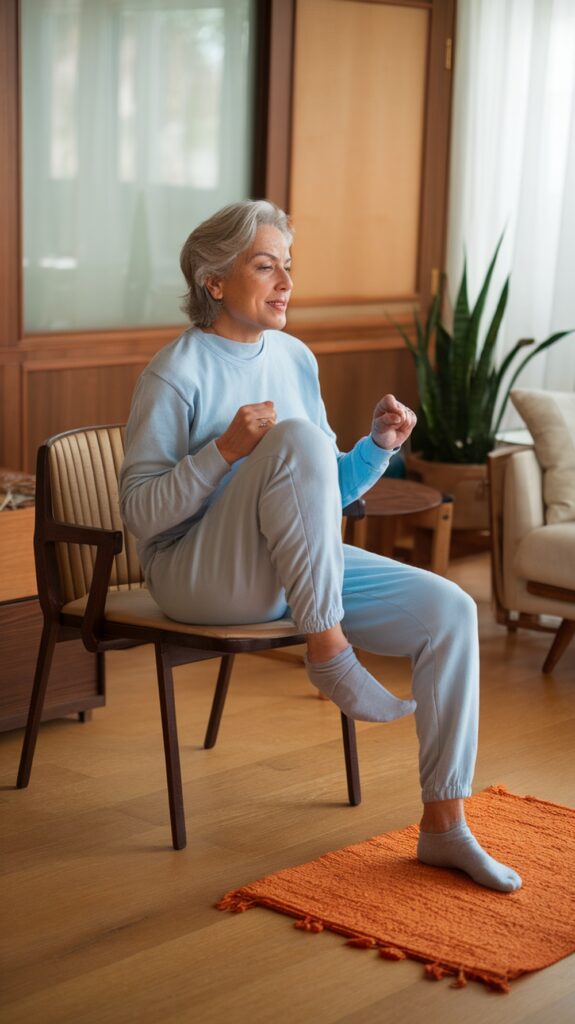
3. Seated Marching for Circulation and Cardio (See How)
[AI-generated illustrative image] Image for illustration purposes
Seated marching is a simple yet effective way to boost circulation and gently raise the heart rate. Sit tall and lift one knee at a time as if marching in place. This rhythmic movement improves coordination and keeps the lower body active without placing stress on the joints, making it ideal for warm-ups or light cardio sessions.
Best tools to use:
- Ankle weights (for added lower-body resistance)
- Resistance bands (optional for light tension)
Why: Increases heart rate and improves coordination while staying low impact.
4. Seated Torso Twists for Flexibility and Core Strength (See How)
Seated torso twists help maintain spinal flexibility and strengthen the core. Sit upright and gently rotate your upper body to one side, hold briefly, then return to center and repeat on the other side. This movement reduces stiffness and supports better posture. Sitting on a balance cushion can further engage the core during this exercise.
Best tools to use:
- Balance cushion (core engagement)
- Light medicine ball or soft exercise ball
Why: Improves spinal mobility and activates core muscles more effectively.
5. Heel-Toe Raises for Ankle Strength and Stability (See How)
Heel-toe raises are a simple but powerful way to strengthen the ankles and improve balance. While seated, lift your toes while keeping your heels on the ground, then switch by lifting your heels while keeping your toes down. This alternating motion improves circulation and supports stability, helping reduce the risk of falls.
Best tools to use:
- Resistance bands (for foot flex resistance)
- Balance cushion (to challenge stability)
Why: Strengthens ankles and improves circulation and balance.
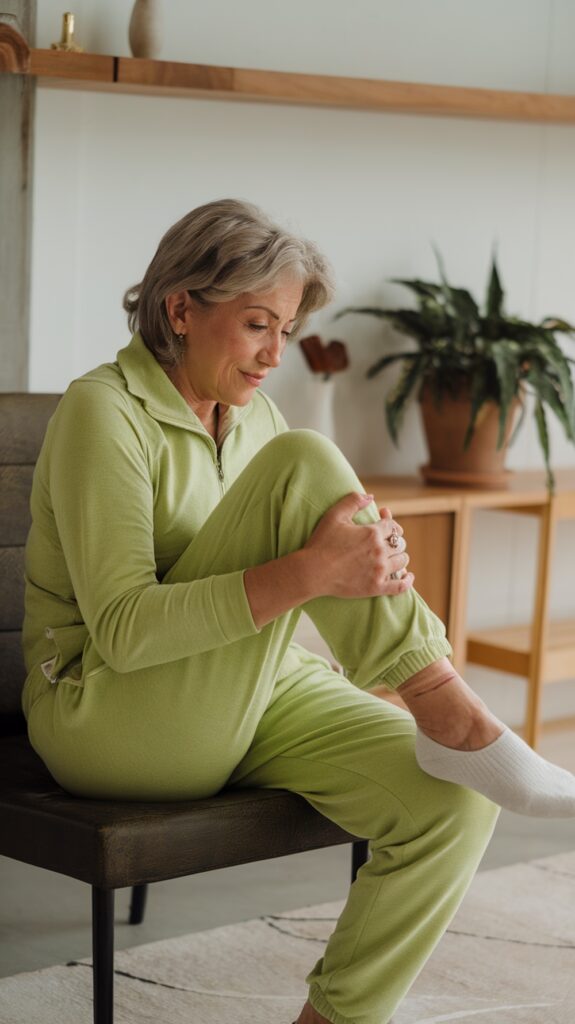
6. Seated Knee-to-Chest for Flexibility and Relief (See How)
[AI-generated illustrative image] Image for illustration purposes
The seated knee-to-chest stretch is ideal for improving flexibility and relieving tension in the hips and lower back. Lift one knee toward your chest and gently hold it with your hands before lowering it and switching sides. This movement promotes relaxation and enhances range of motion, making it a valuable addition to any routine.
Best tools to use:
- Stretch strap or resistance band
- Soft exercise ball (for support or variation)
Why: Helps deepen the stretch safely and improve hip mobility.
10-Minute Chair Workout for Seniors
| Step | Exercise | Time / Reps | Focus Area | Tips |
|---|---|---|---|---|
| 1 | Seated Marching | 1 minute | Cardio, circulation | Sit tall, move steadily |
| 2 | Seated Arm Raises | 10 reps | Shoulders, arms | Add light dumbbells if ready |
| 3 | Seated Leg Extensions | 10 reps each leg | Thighs, knees | Extend slowly, control movement |
| 4 | Torso Twists | 10 reps each side | Core, flexibility | Keep movements gentle |
| 5 | Heel-Toe Raises | 15 reps | Ankles, circulation | Alternate smoothly |
| 6 | Knee-to-Chest | 8 reps each leg | Hips, lower back | Hold briefly, don’t rush |
>> Looking For A 30 Day Plan To Feel Stronger, More Balanced, and More Confident? Get Further Details By Clicking HERE.
Final Thoughts
Hopefully, this article has brought you some motivation and has helped to eliminate any anxiety you may have in getting started. In this article, you have discovered a routine that provides overall health benefits. Chair exercises show that staying active doesn’t have to be complicated. With just a few minutes each day and the option to incorporate simple equipment, seniors can improve strength, flexibility, and overall well-being. The key is consistency—small, regular efforts lead to lasting results. Start simple, progress at your own pace, and enjoy the benefits of staying active from your chair!
This is a blessing for seniors.
Thank you so much
Ghouse
You are so welcome! Thank you for taking the time to provide this feedback! Best wishes moving forward!!