Disclaimer: This post contains affiliate links. As an Amazon Associate, I earn from qualifying purchases. If you click through and buy any home fitness gear, I receive a small commission at no additional cost to you.
Disclaimer: The information on this blog is for educational purposes only and does not substitute for professional medical advice. Always consult a physician before starting a new exercise program or using home gym equipment.

[AI-generated illustrative image] Image for illustration purposes
Body feeling a bit tight? Stiff back perhaps, tight hips, legs that just feel like they have had better days? If so, you are not alone. There are a number of factors that may lead to a loss of mobility and flexibility, as well as the ‘tightness’ we encounter from time to time. Fortunately, there is a piece of fitness equipment that has become extremely popular to help with these issues. Enter the foam roller.
The foam roller has become a ‘go to’ for women and men for a number of reasons. Not only can this product assist with how the body moves and recovers, it’s one that is affordable and easy to use. In this article, we will take a look at a number of these foam rollers and the exercises to perform in helping with both flexibility and mobility. Let’s get started:
How Foam Rolling Can Be Helpful (7 Benefits To Consider)
Before we get into product picks and foam roller exercises, let’s talk about the benefits these products can provide. As you can see below, this simple tool packs a powerful punch in any fitness routine, and one you can perform right from home. Let’s take a look at these 7 benefits here provided by: Ivyrehab
- Reducing muscle tension caused by stress or overuse
- Accelerating muscle recovery after workouts or injuries
- Boosting overall mobility and flexibility
- Soothing muscle soreness and tightness
- Improving blood circulation throughout the body
- Promoting relaxation and easing mental tension
- Supporting injury preventionby maintaining healthy tissue elasticity
For women specifically, common problem areas include the hip flexors (especially after long hours of sitting), the thoracic spine (upper and mid-back), the IT band (outer thigh), and the calves. Regular foam roller stretches targeting these zones can support noticeable improvements in how freely you move over time.
Choosing the Right Foam Roller
[AI-generated illustrative image] Image for illustration purposes
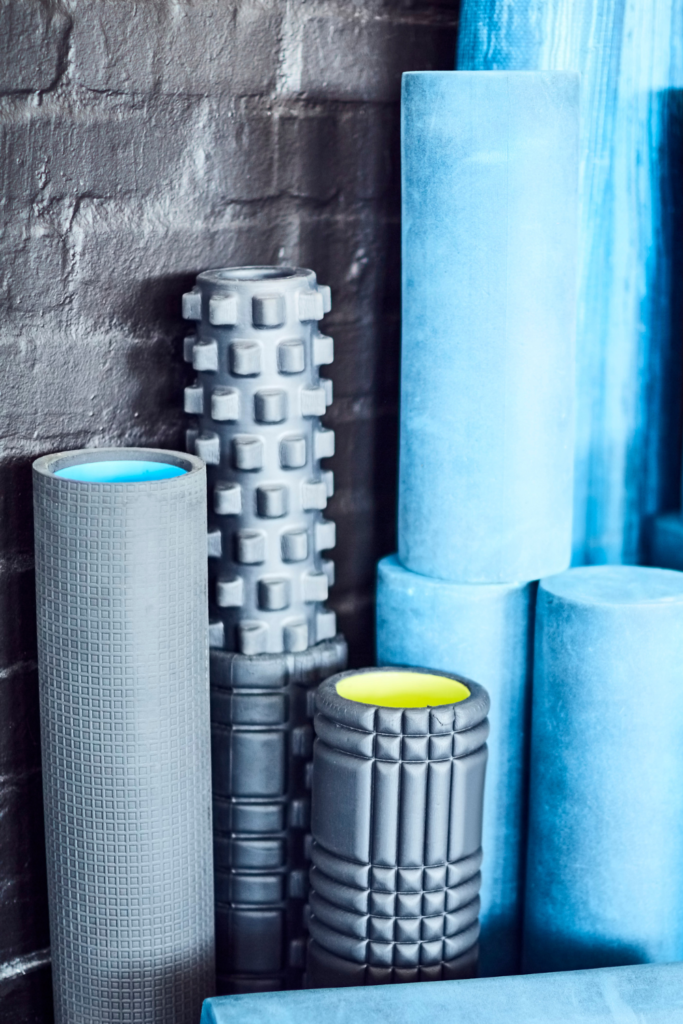
When considering a foam roller, it’s worth noting that you can now find a variety of these fitness products. Below is a brief description of each, to assist you in choosing one that best benefits your personal needs. Let’s take a look:
Smooth, Low-Density Rollers — Soft and forgiving, these are ideal for beginners or anyone with sensitive muscles. They provide gentle pressure without being too intense.
Smooth, High-Density Rollers — Firmer and more durable, these offer deeper pressure and are great for general maintenance rolling.
Textured / Grid Rollers — Featuring ridges, grids, or knobs, these mimic the fingers of a massage therapist and target deeper layers of muscle tissue. They’re excellent for experienced rollers who want more targeted relief.
Vibrating Rollers — A more premium option, vibrating rollers add another layer of muscle stimulation that can accelerate recovery and enhance relaxation.
Top Foam Roller Picks for Women
1. TriggerPoint GRID Foam Roller
This is a cult favorite for good reason. The GRID’s multi-density surface and hollow core design make it durable and effective. It mimics the feeling of hands-on massage with its varied texture zones. At 13 inches, it’s compact enough to toss in a gym bag but long enough for most exercises. It’s ideal for intermediate users who want to go a little deeper than a basic roller allows.
Best for: IT band rolling, upper back releases, quad and hip flexor work.
2. Amazon Basics High-Density Round Foam Roller
Don’t sleep on this one just because it’s budget-friendly. This smooth, high-density roller is an absolute workhorse. At 36 inches, it’s long enough to support your entire spine during thoracic extension exercises — one of the most popular and beneficial foam roller stretches for desk workers. It’s straightforward, consistent, and built to last.
Best for: Spinal mobility, full-body rolling sessions, beginners and experienced users alike.
3. OPTP PRO-Roller Soft Density Foam Roller – Low Density
[AI-generated illustrative image] Image for illustration purposes
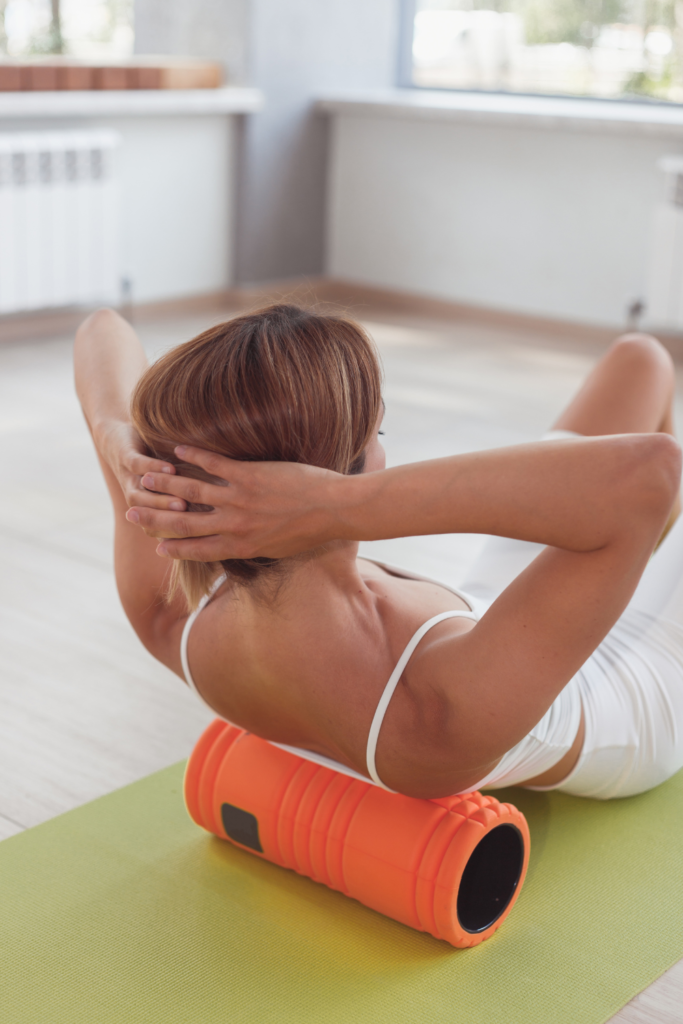
The OPTP PRO-ROLLER Soft Foam Roller is a professional-quality, maximum-durability tool made from closed-cell, heat-molded EVA foam that’s easy to wipe clean and built to outlast standard store models. At 36 inches long and 6 inches in diameter, it’s perfectly sized for full-body use — whether you’re rolling out tight muscles, improving balance and stability, supporting rehabilitation, or incorporating it into your Pilates, yoga, or home mobility routine.
Best for: Women focusing on posture, mobility, and gentle self-massage at home.
4. Hyperice Vyper 3 Vibrating Foam Roller
If you’re ready to invest in recovery, the Vyper 3 is in a class of its own. With three vibration settings, this roller amplifies the benefits of self-myofascial release by combining pressure with vibration to relax muscle tissue more quickly. Research comparing vibrating and standard foam rollers found that vibration significantly reduced muscle soreness in the 48 hours after intense exercise. (Source: Frontiers in Public Health, 2025)
Best for: Post-workout recovery, stubborn knots, women who exercise intensely or regularly.
5. RumbleRoller Original Textured Foam Roller
The RumbleRoller Original stands out from traditional foam rollers with its unique, sturdy textured pattern of bumps that deliver a deep, targeted massage unlike anything else on the market. Going beyond surface-level relief, it digs into connective tissue and fascia to circulate blood and oxygen, erode trigger points, restore flexibility, and bring fast relief to common muscular pain — helping you move better than you ever thought possible.
Best for: A serious recovery tool for committed, active women who have outgrown basic foam rolling and need deeper, more targeted relief.
Foam Roller Exercises to Improve Mobility and Flexibility
[AI-generated illustrative image] Image for illustration purposes
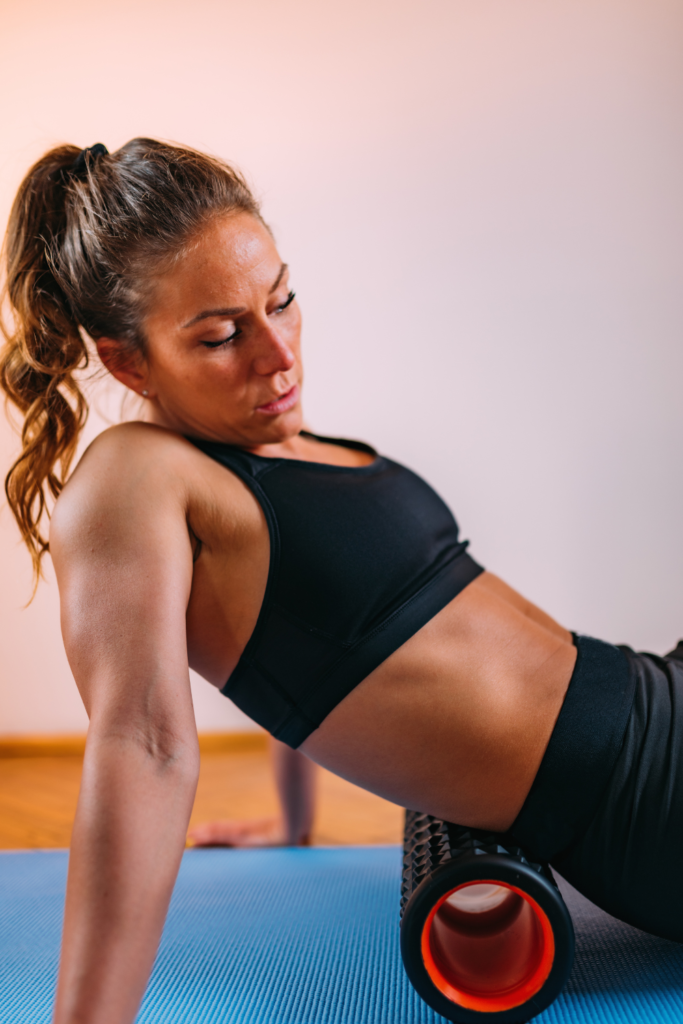
Now for the fun part — the actual moves. Incorporate these foam roller exercises and foam roller stretches into your daily or post-workout routine for best results. Aim to spend 30–60 seconds on each area, rolling slowly and pausing on any tender spots.
1. Thoracic Spine Extension … Upper Back Mobility (View the Video)
Why it helps: Counters the forward rounding that comes from sitting, driving, or looking at your phone.
Place the foam roller horizontally under your upper back, just below your shoulder blades. Support your head with your hands, feet flat on the floor. Gently extend over the roller, opening your chest toward the ceiling. Shift slightly up and down your spine, pausing where you feel tension. This is one of the most beloved foam roller stretches for improving posture and upper back mobility and flexibility.
2. IT Band Roll … Outer Thigh Release (View the Video)
Why it helps: Tight IT bands contribute to knee pain and limited hip mobility.
Lie on your side with the roller under your outer thigh, just below your hip. Use your forearm for support and stack your feet or stagger them for stability. Slowly roll from your hip down toward your knee. This one can be intense — breathe through it and go slowly.
3. Hip Flexor Release (See the Video)
Why it helps: Tight hip flexors tilt your pelvis forward, limiting mobility and causing low back pain.
Lie face down with the roller under one hip/front thigh. Prop up on your forearms and gently roll along the front of your hip and upper thigh. For a deeper stretch, bend the knee of the leg being rolled and hold it briefly. This is one of the most impactful foam roller exercises for women who sit for long periods.
4. Glute and Piriformis Roll (See the Video)
Why it helps: The glutes and piriformis (a deep hip muscle) are common culprits behind lower back tightness and sciatic discomfort.
Sit on top of the roller with your weight shifted to one glute. Cross the ankle of that leg over your opposite knee to deepen the stretch. Slowly roll around the glute area, pausing on tender spots. Switch sides.
5. Calf Roll (See the Video)
Why it helps: Tight calves restrict ankle mobility and can affect your entire kinetic chain.
Sit on the floor with your legs extended. Place the roller under your calves. Lift your hips and slowly roll from just above the ankle to just below the knee. For more pressure, cross one leg over the other.
6. Lat Stretch and Roll (See the Video)
Why it helps: Opens up the side body, improving shoulder mobility and breathing.
Lie on your side with the roller under your armpit/upper lat area. Extend your top arm overhead. Slowly roll down the side of your ribcage. This one feels incredible after an upper-body workout or a long day of carrying a heavy bag.
Final Thoughts
[AI-generated illustrative image] Image for illustration purposes
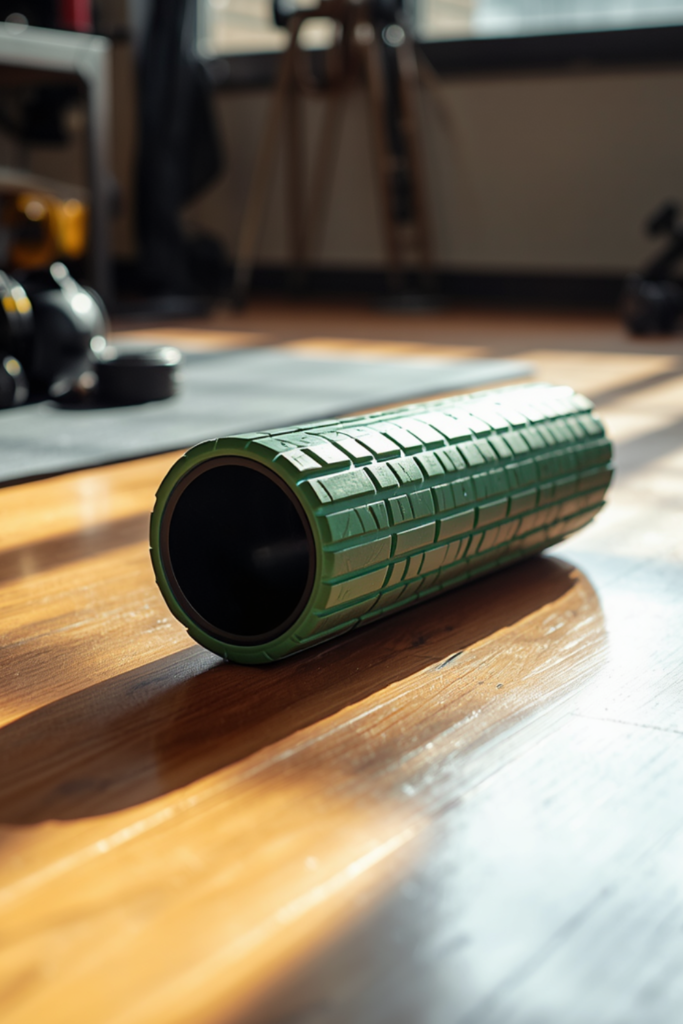
In this article, we have taken a look at the foam roller, and the role it can play your overall at home fitness. We focused our attention to the variety of foam rollers on the market today, and which one should be considered for your specific needs. In addition to the selection process, you were given a number of foam roller exercises as well as the benefits associated with each.
Hopefully, you have now have further insight on why these foam rollers are one of the most popular products to use at home. Whether you’re working through post-workout soreness, undoing years of desk-sitting, or simply trying to move through life with more ease and grace, these tools make a real difference. Thank you for visiting this article, and hopefully it has brought you some valuable insight. Get started today!