
If you are like me, a good stretch just seems to make the body feel a whole lot better. A good routine of stretching exercises will go a long way in improving your flexibility and overall mobility. In addition, stretching exercises for flexibility plays a significant role in preventing injuries, and enjoying everyday activities. Whether you’re an athlete looking to improve performance, someone easing stiffness from sitting all day, or a beginner wanting to feel more comfortable in your own body, stretching can make a noticeable difference in how you move and feel.
In this article, we will take a look at a number of the best types of stretches, and how each of these should be performed. We will take a quick look at the benefits associated with stretching exercises and illustrate a 15 minute routine that youi may want to consider in your training. Let’s get started:
Disclaimer: This post contains affiliate links. As an Amazon Associate, I earn from qualifying purchases. If you click and make a purchase, I may earn a small commission at no extra cost to you.
The Benefits of Improved Flexibility
Before diving into specific exercises, it’s important to understand why flexibility matters. Regular stretching offers numerous advantages (according to Harvard Health Publishing) that extend far beyond simply being able to touch your toes. Think about it this way. When your muscles are flexible, it enables you to get through the day doing common tasks. For example, picking up something from the floor or reaching up to retrieve a can of soup from the top shelf. You do these things without really thinking about it.
When your body can move freely and efficiently, you’re less likely to suffer injury caused by stiffness or restricted movement. Descreased muscle soreness, better blood flow to your muscles, enhanced sports performance are just a few of the other benefits attributed to improved flexibility. Ready to get started? Let’s find out how to do it safely:
Stretching Fundamentals: Getting Started Safely
Before we get to specific exercises, it’s important that you understand the importance of preparation. Below I have listed a number of items to consider before you take up these stretching exercises. These fundamental principles will guide you toward safe and effective stretching practices.
1. Warm-Up First –
Perform a light cardio activity such as running in place, arm cirlces, etc. to get the blood flowing to your muscles. Never stretch cold muscles.
2. Stretch to Tension, Not Pain
You should feel a mild tension or pulling sensation in the muscle being stretched, but never pain. If you experience sharp or intense pain, back off immediately. The saying “no pain, no gain” does not apply to stretching – pain is your body’s warning signal that you’re pushing too far.
3. Hold Steady, Don’t Bounce
Use static stretches where you hold a position without bouncing or jerking movements. Bouncing during a stretch can trigger a protective reflex that actually causes the muscle to tighten rather than relax, potentially leading to tears or strains.
4. Duration and Frequency
For optimal results, hold each stretch for 15-30 seconds and repeat 2-3 times. Aim to stretch at least 3-5 times per week, though daily stretching will yield the fastest improvements in flexibility. Consistency is key – regular stretching sessions are more beneficial than occasional intense sessions.
5. Progress Gradually
Flexibility develops over time, not overnight. Be patient with your body and gradually increase the intensity of your stretches as your flexibility improves. Avoid comparing yourself to others, as natural flexibility varies greatly between individuals.
13 Essential Stretching Exercises For Flexibility
Now that we understand the benefits and fundamentals of stretching, let’s explore specific exercises that target different muscle groups. These stretches are organized by body region to create a comprehensive routine that addresses your entire body.
Lower Body Stretches
The lower body contains some of our largest muscle groups, which often become tight due to prolonged sitting or physical activity. These stretches will help maintain mobility in your legs, hips, and lower back.
1. Hamstring Stretch

Target: Hamstrings (back of thighs)
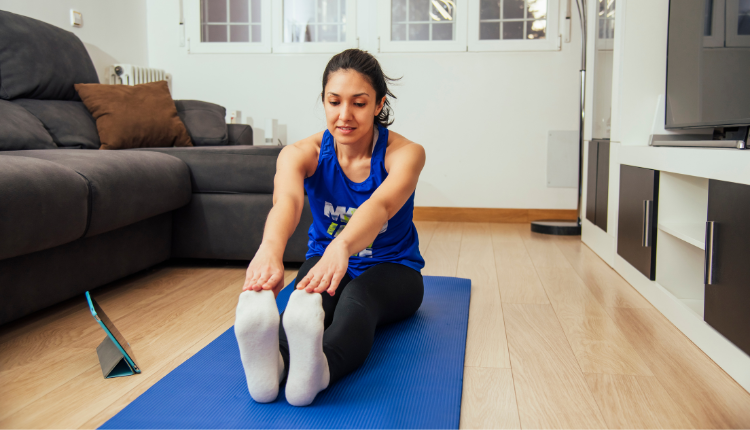
How to perform: Sit on the floor on a yoga mat with one leg straight and the other bent so your foot rests against your inner thigh. Keep your back straight and slowly lean forward from your hips toward your straight leg.Reach for your toes, ankle, or shin — wherever feels comfortable.Hold the stretch for 20 to 30 seconds and feel a gentle pull in the back of your thigh.
2. Calf Stretch
Target: Calf muscles (gastrocnemius and soleus)
How to perform: Stand facing a wall with one foot forward and one foot back. Keep your back leg straight with the heel on the ground. Bend your front knee and lean toward the wall until you feel a stretch in your back calf. Hold for 30 seconds, then switch sides.
3. Hip Flexor Stretch

Target: Hip flexors (front of hips)
How to perform: Kneel on one knee with your other foot planted in front at a 90-degree angle. Keep your back straight and gently push your hips forward until you feel a stretch in the front of your hip on the kneeling side. Hold for 30 seconds, then switch sides.
4. Inner Thigh Stretch
Target: Adductor muscles (inner thighs)
How to perform: Sit on the floor with the soles of your feet together and knees pointing outward. Hold your ankles and gently press your knees toward the floor using your elbows. Keep your back straight and feel the stretch along your inner thighs. Hold for 30 seconds.
Upper Body Stretches
Upper body tension is common from computer use, smartphone scrolling, and carrying heavy items. These stretches target the shoulders, chest, back, and arms to improve posture and reduce discomfort.
5. Doorway Pectoral Stretch

Target: Chest and anterior shoulder
How to perform: Stand in a doorway with your arms raised to shoulder height, elbows bent at 90 degrees, and forearms resting on the doorframe. Step forward with one foot and lean your body forward until you feel a stretch in your chest and the front of your shoulders. Hold for 30 seconds.
6. Cross-Body Shoulder Stretch
Target: Posterior shoulder and upper back
How to perform: Bring one arm across your chest and use the opposite hand to gently pull the arm closer to your body. Keep your shoulders relaxed and feel the stretch in the back of your shoulder. Hold for 30 seconds, then switch sides.
7. Overhead Triceps Stretch

Target: Triceps (back of upper arms)
How to perform: Raise one arm overhead and bend your elbow so your hand reaches down your back. Use your other hand to gently pull the elbow toward your head. Feel the stretch in the back of your upper arm. Hold for 30 seconds, then switch sides.
8. Lateral Neck Stretch
Target: Neck and upper trapezius
How to perform: Sit or stand with good posture. Tilt your head to one side, bringing your ear toward your shoulder without raising the shoulder. For a deeper stretch, place the hand of the same side on top of your head and gently apply pressure. Hold for 30 seconds, then switch sides.
Core and Back Stretches
A flexible spine is essential for overall mobility and posture. These stretches target your core, back, and the muscles that support your spine.
9. Cat-Cow Stretch

Target: Spine and core muscles
How to perform: Start on your hands and knees with wrists under shoulders and knees under hips. Inhale as you drop your belly toward the floor, lifting your tailbone and chest (cow). Exhale as you round your spine toward the ceiling, tucking your chin and tailbone (cat). Flow between these positions for 30 seconds.
10. Child’s Pose
Target: Lower back, hips, and shoulders
How to perform: Kneel on the floor with your big toes touching and knees spread wide. Sit back on your heels and extend your arms forward, lowering your chest toward the floor. Rest your forehead on the ground and feel the stretch along your back, shoulders, and hips. Hold for 30 seconds.
11. Seated Spinal Twist

Target: Spine rotators and obliques
How to perform: Sit on the floor with legs extended. Bend your right knee and place your right foot outside your left thigh. Place your left elbow on the outside of your right knee and gently twist to the right, looking over your right shoulder. Hold for 30 seconds, then switch sides.
12. Standing Side Bend
Target: Obliques and intercostal muscles
How to perform: Stand with feet hip-width apart. Raise one arm overhead and lean to the opposite side, creating a C-shape with your body. Keep both feet grounded and feel the stretch along the side of your torso. Hold for 30 seconds, then switch sides.
13. Supine Spinal Twist

Target: Lower back and glutes
How to perform: Lie on your back with arms extended in a T-position. Bend your knees and let them fall to one side while keeping your shoulders flat on the floor. Turn your head in the opposite direction of your knees. Feel the twist through your spine and lower back. Hold for 30 seconds, then switch sides.
Below you will find a list of products that you may use to enhance the stretching routine:
- Stretching Strap or Resistance Band – Helps deepen stretches and improve flexibility.
- Foam Roller – Loosens tight muscles and improves blood flow before or after stretching.
- Yoga Blocks – Offers support and helps modify stretches for better form.
- Massage Ball – Targets small muscle areas for tension relief and improved mobility.
- Balance Ball (Stability Ball) – Adds variety and helps engage core muscles during stretches.
- Portable Massage Gun – Aids in muscle recovery and reduces soreness after stretching sessions.
15-Minute Full-Body Flexibility Routine
- Warm-up (2 minutes): Light marching in place, arm circles, and gentle torso twists to increase blood flow.
- Cat-Cow Stretch (1 minute): Flow between positions to warm up the spine.
- Standing Hamstring Stretch (1 minute): 30 seconds per side.
- Standing Calf Stretch (1 minute): 30 seconds per side.
- Kneeling Hip Flexor Stretch (1 minute): 30 seconds per side.
- Seated Figure Four Stretch (1 minute): 30 seconds per side.
- Chest Opener Stretch (30 seconds): Open the front of the body.
- Cross-Body Shoulder Stretch (1 minute): 30 seconds per side.
- Overhead Triceps Stretch (1 minute): 30 seconds per side.
- Lateral Neck Stretch (1 minute): 30 seconds per side.
- Standing Side Bend (1 minute): 30 seconds per side.
- Child’s Pose (30 seconds): Gentle release for the back.
- Seated Spinal Twist (1 minute): 30 seconds per side.
- Supine Spinal Twist (1 minute): 30 seconds per side.
- Final relaxation (1 minute): Lie on your back with arms and legs extended, breathing deeply.
Final Thoughts:
Improving flexibility isn’t just about stretching your muscles — it’s about creating a body that moves with ease throughout the day. In this article, we took a look at a number of exercises to improve our flexibility, including a brief but productive 15-Minute Full-Body Flexibility Routine. Whether you stretch in the morning to wake up your body, after a workout to aid recovery, or in the evening to unwind, every session brings you one step closer to greater mobility and movement.
Remember, flexibility is a gradual process that rewards consistency and patience. Start with small, intentional stretches, focus on proper form, and listen to your body’s limits. Over time, your flexibility will increase, your movements will feel more natural, and your body will thank you for the care and attention. Keep stretching, stay committed, and enjoy the freedom that comes with improved mobility and a healthier, more balanced body. To your health!
Disclaimer: I am not a healthcare professional. The purpose of this article is to provide general information for public consumption and is not meant to substitute for medical advice. Please consult a doctor prior to making significant changes in your diet, lifestyle, or exercise regimen.