Let me start off by asking you a question: How many of you are familiar with, or are actually performing standing abs to strengthen the core? To be totally transparent, so I decided to look into it. What I found almost immediately was the popularity that this exercise now has as well as the benefits it provides. In this article, we will take a further look into this trend and why it might be worth considering in your fitness routine. Let’s take a look:
Disclaimer: This post contains affiliate links. As an Amazon Associate, I earn from qualifying purchases. If you click and make a purchase, I may earn a small commission at no extra cost to you.
Quick Glance:
Standing abs workouts are quickly becoming a favorite in modern fitness routines, offering a powerful way to strengthen the core without getting down on the floor. By training the abdominal muscles while standing, these exercises engage the core in a more functional, full-body way, improving balance, coordination, and posture at the same time.
Whether you’re short on space, prefer low-impact movements, or want a routine that easily fits into an at-home gym session, standing abs exercises provide a versatile and time-efficient alternative to traditional core workouts while still delivering noticeable strength and toning benefits. Unlike traditional ab workouts that rely heavily on floor exercises like crunches and planks, standing abs exercises allow you to train your core while upright, engaging multiple muscle groups at once. Let’s now take a look at some of these exercises:
Warm-Up (3 Minutes)
Standing March in Place
March lightly while engaging your core and swinging your arms naturally.
Benefits:
Prepares the core and hip flexors for movement, increases circulation, and gently activates the abdominal muscles.
Equipment:
None required.
Main Standing Abs Circuit
Perform each exercise for 40 seconds, followed by 20 seconds of rest. Complete 2–3 rounds, depending on time and fitness level.
1. Standing Knee Drives

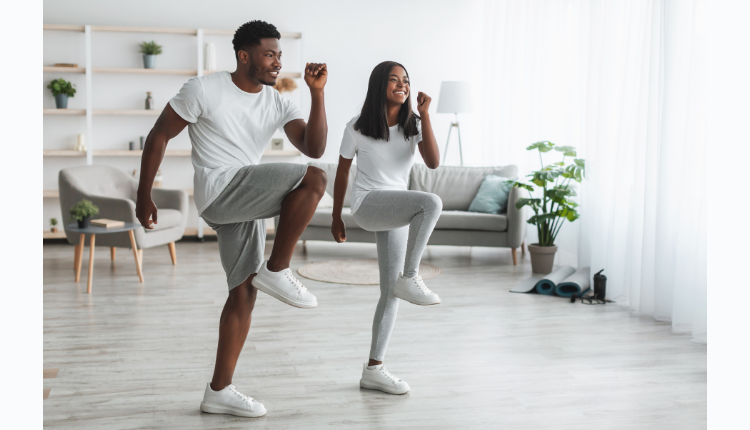
Lift one knee toward your chest while bracing your core, alternating sides.
Benefits:
This exercise activates the lower abs and hip flexors while improving balance and coordination. It also helps reinforce proper core bracing in an upright position.
Helpful Equipment:
- Ankle weights (optional for added resistance)
- Athletic shoes for stability
2. Standing Torso Twists
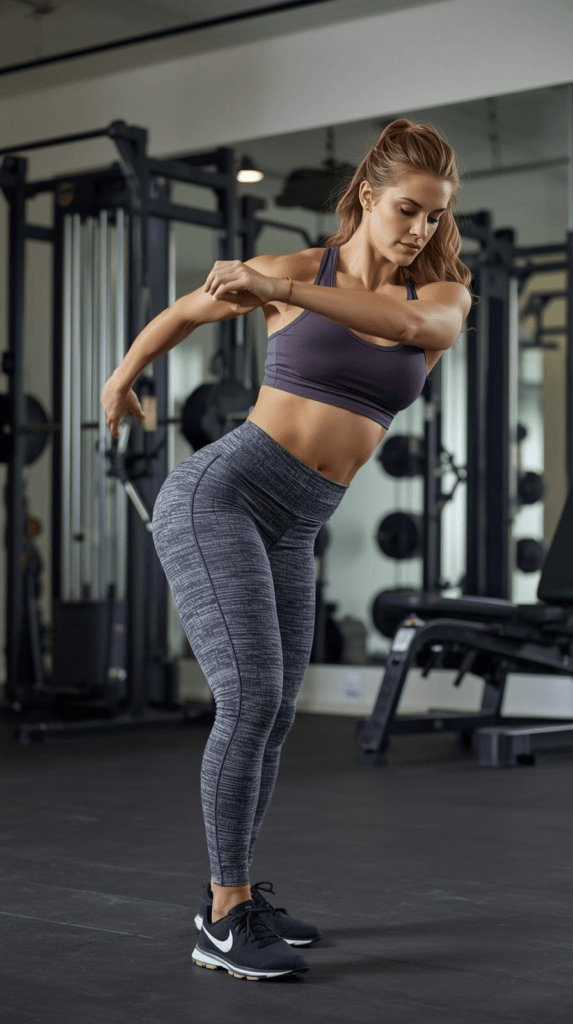
Stand tall with feet shoulder-width apart and rotate your torso side to side in a controlled motion.
Benefits:
Targets the obliques and improves rotational strength, which supports everyday movements like twisting and reaching.
Helpful Equipment:
- Light dumbbell or medicine ball (optional)
- Resistance band for controlled rotation
3. Side Bends (Bodyweight or Weighted)
Bend sideways at the waist, engaging the obliques, then return to center before switching sides.
Benefits:
Strengthens the oblique muscles and helps improve lateral core stability, contributing to better posture.
Helpful Equipment:
- Dumbbell or kettlebell for added challenge
- Resistance band anchored under one foot
4. Standing Balance Crunches
Lift one knee while crunching the torso slightly toward it, then alternate sides.
Benefits:
Engages the upper and lower abs while challenging balance and coordination, making the core work harder to stabilize the body.
Helpful Equipment:
- None required
- Optional light dumbbell for counterbalance
5. Standing March With Twist
March in place while twisting the torso toward the lifted knee.
Benefits:
Combines core rotation with lower-body movement, increasing calorie burn and strengthening both the abs and obliques.
Helpful Equipment:
- Light dumbbell or medicine ball
- Resistance band for added tension
6. Side Step Crunches
Step laterally and bring the knee up while crunching the torso toward it.
Benefits:
Targets the obliques and lower abs while adding a cardio element, making this move effective for core toning and endurance.
Helpful Equipment:
- None required
- Ankle weights for progression
7. Diagonal Woodchops (Bodyweight or Weighted)
Move your arms diagonally across your body as if chopping wood, engaging the core throughout.
Benefits:
This functional movement strengthens the entire core, especially the obliques, and improves rotational power and coordination.
Helpful Equipment:
- Dumbbell or kettlebell
- Resistance band anchored low or high
8. High Knee March With Core Brace
Lift knees high while keeping the core tight and posture upright.
Benefits:
Engages the lower abs, improves core endurance, and reinforces proper posture during dynamic movement.
Helpful Equipment:
- None required
- Ankle weights for added intensity
9. Dumbbell Side Bends
Hold a dumbbell in one hand and bend sideways, then switch sides.
Benefits:
Increases resistance for oblique strengthening and helps develop deeper core stability.
Helpful Equipment:
- Dumbbell or kettlebell
10. Overhead Dumbbell Ab Circles
Hold a dumbbell overhead and move it in slow, controlled circles.
Benefits:
Challenges the entire core by forcing it to stabilize the spine while the arms move, improving strength and shoulder-core coordination.
Helpful Equipment:
- Dumbbell (light to moderate weight)
Workout Timing Breakdown
- 10 exercises × 40 seconds = ~7 minutes per round
- Rest time included = ~8 minutes per 2 rounds
- Total workout time with warm-up = 18–20 minutes
Final Thoughts
This routine strengthens the core through upright, functional movement, engaging the abs, obliques, hips, and stabilizing muscles simultaneously. By eliminating floor-based exercises, it’s easier on the joints, adaptable for small spaces, and ideal for consistent at-home training. The optional use of weights allows for progression, making this workout suitable for beginners and more advanced fitness levels alike.
Disclaimer: I am not a healthcare professional. The purpose of this article is to provide general information for public consumption and is not meant to substitute for medical advice. Please consult a doctor prior to making significant changes in your diet, lifestyle, or exercise regimen.